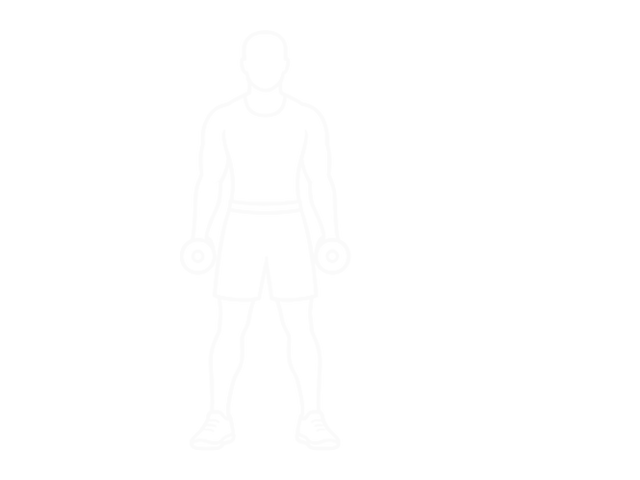
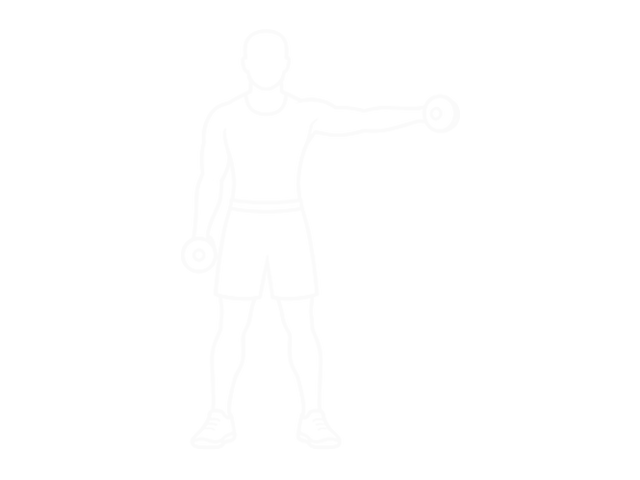
A standing raise sequence alternating one arm at a time, typically switching between front and lateral raises, for time-efficient front and side delt volume with built-in rest per arm.
ShouldersDumbbellShoulder raise
Start
End
Primary
Anterior deltoidsLateral deltoids
Secondary
Upper trapeziusSerratus anteriorCore
Equipment
Dumbbell
Pattern
Shoulder raise
Setup
01Stand with feet hip width apart holding a light dumbbell in each hand.
02Let the arms hang at the sides with a slight elbow bend.
03Set the shoulder blades down and brace the trunk.
04Soften the knees so the legs absorb nothing during the raises.
Execution
01Raise one arm to shoulder height, to the front or the side per your chosen pattern.
02Lower it under control back to the start.
03Raise the other arm the same way while the first arm rests.
04Keep alternating with an even tempo and identical range on both sides.
Checkpoints
-Only one arm moves at a time and the torso stays still.
-Every rep stops at shoulder height with a fixed elbow bend.
-No hip or knee bounce feeding momentum into the raise.
-Left and right ranges of motion match.
Common mistakes
-Rocking the torso side to side in rhythm with the arms.
-Turning the built-in rest into an excuse to go too heavy and swing.
-Shrugging as the arm approaches shoulder height.
-Losing count and giving one arm more reps than the other.
Programming notes
-Use 2 to 4 sets of 10 to 15 reps per arm as delt accessory volume.
-The alternating format lets you use slightly more weight than simultaneous raises; keep form strict anyway.
-Works well as a superset partner after overhead pressing.