Back to libraryStart 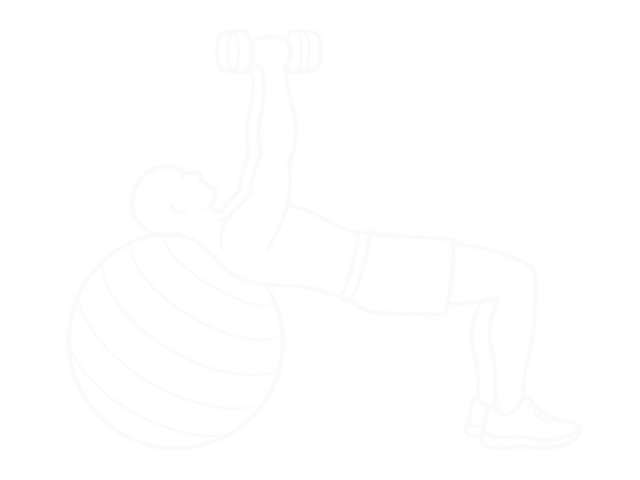
End 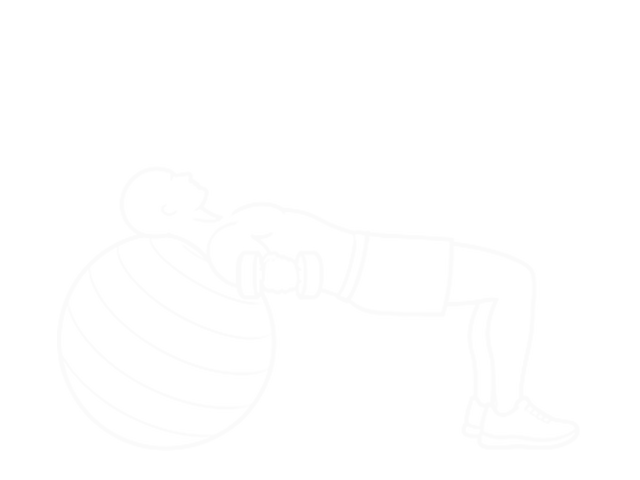
Exercise Library
Incline Dumbbell Fly on Exercise Ball
An incline dumbbell fly performed on a stability ball with the hips dropped below the shoulders, targeting the upper chest while the trunk stabilizes.
ChestDumbbellHorizontal adduction
Primary
Pectoralis major
Secondary
Anterior deltoidsCoreGlutes
Equipment
Dumbbell
Pattern
Horizontal adduction
Setup
- 01Sit on a stability ball with a dumbbell in each hand and walk the feet forward slightly.
- 02Lean back so the upper back rests on the ball with the hips lower than the shoulders, creating an incline torso angle.
- 03Plant the feet wide for a stable base.
- 04Extend the dumbbells above the upper chest, palms in, elbows slightly bent.
Execution
- 01Lower the dumbbells out to the sides in a wide arc until the upper chest stretches.
- 02Keep the incline torso angle constant; do not let the hips rise or sink.
- 03Squeeze the chest to bring the dumbbells back up over the shoulders.
- 04Stop short of touching to hold tension.
Checkpoints
- -Torso angle stays fixed at roughly 30 to 45 degrees.
- -The ball does not roll during the arc.
- -Elbow bend is constant from top to bottom.
- -Head and upper back stay supported.
Common mistakes
- -Letting the hips sag further and turning the incline into a flat fly.
- -Using bench-fly loads and losing control of the ball.
- -Shortening the arc by bending the elbows.
- -Setting the feet too narrow to resist the side-to-side load.
Programming notes
- -Use 2 to 3 sets of 10 to 15 reps with light to moderate dumbbells.
- -A bench incline fly allows more load; use this version for home training or stability variety.
- -Keep 1 to 2 reps in reserve; failing a fly on a ball is hard to bail safely.
Related exercises
Out now
Now on the App Store and Google Play
Free to download, no account required to start.